

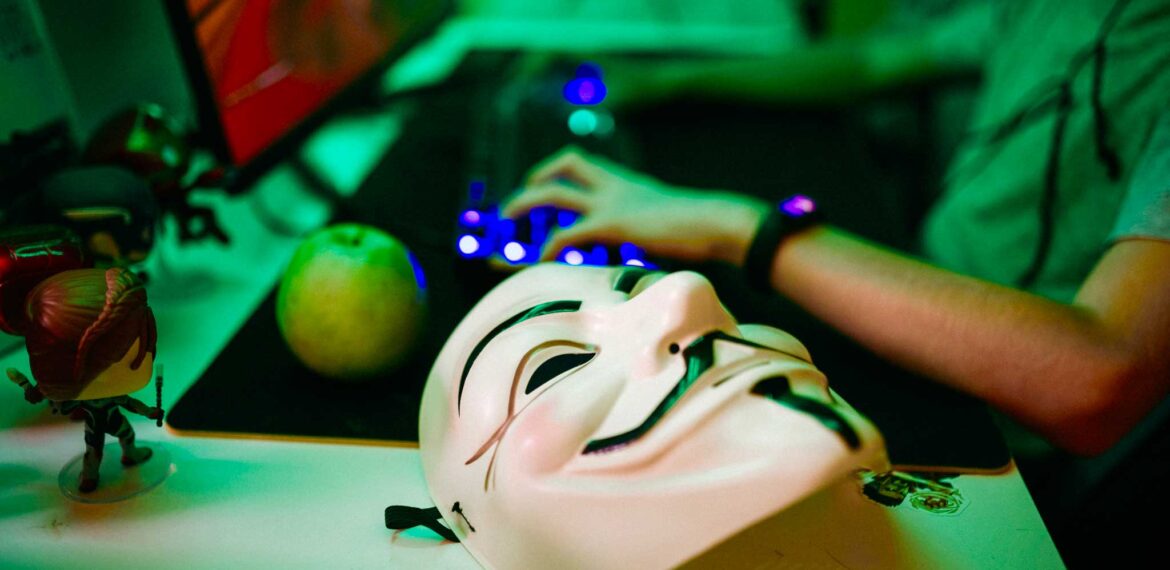
Was Pascal involved with Anonymous?
Was Pascal involved with Anonymous?
 admin
admin
The short answer is yes.
I was involved with Anonymous.
But it is not something I look back on with pride.
My involvement started in 2012, when I was approached after gaining attention for my abilities as a hacker. I was asked whether I had any interest in becoming involved with the collective.
There was a catch.
You did not simply announce that you wanted to join.
I first had to prove myself.
I was given a series of technical and hacking-related assignments designed to test what I was capable of. I was given 10 days to complete all of them.
I finished them in four.
Every assignment was completed successfully.
That was effectively the beginning of my involvement with Anonymous.
At first, it seemed like an extraordinary world to become part of. Anonymous had built an international reputation around digital activism, exposing wrongdoing, challenging powerful organizations and governments, defending freedom of information, and giving a voice to people who otherwise felt powerless.
At least, that was the image.
Over time, however, I started questioning what was happening behind that image.
And the more questions I asked, the more uncomfortable I became.
When Activism Becomes Something Else
There is a romanticized version of Anonymous that many people know.
The Guy Fawkes mask.
The videos.
The distorted voices.
The declarations against governments, corporations, censorship, corruption and injustice.
We are Anonymous. We are Legion.
It created the image of a decentralized digital resistance fighting for ordinary people.
And sometimes, that image was justified.
But there was another side to it.
One that the public did not always see.
I began criticizing certain operations, information being circulated, and decisions being made under the Anonymous banner.
For me, there was a simple problem:
You cannot claim to fight manipulation while manipulating people yourself.
You cannot condemn misinformation and then publish misleading information because it happens to benefit your cause.
You cannot demand accountability from governments and corporations while refusing to accept accountability for your own actions.
And you cannot present only your victories and “good deeds” to the public while pretending the darker consequences of your actions do not exist.
That is not activism.
That is hypocrisy.
And hypocrisy is something I have very little tolerance for.
Eventually, those disagreements became impossible to ignore.
In 2016, after repeatedly criticizing certain assignments and challenging information that I believed was misleading or dishonest, my relationship with the group came to an end.
I was exposed and pushed out.
Looking back, it was probably inevitable.
Because at some point you have to decide whether belonging to something is more important than questioning it.
For me, the answer was no.
The Darker Side of Anonymous
Anonymous has undoubtedly been involved in campaigns that brought attention to genuine injustice.
But acknowledging that does not mean ignoring everything else.
The reality is far more complicated.
1. Cyberattacks and Digital Vigilantism
Anonymous became infamous for cyberattacks against governments, corporations, organizations and individuals.
Some operations were presented as acts of protest or resistance.
Others went much further.
Distributed Denial of Service attacks, commonly known as DDoS attacks, could make websites and online services inaccessible. Websites were defaced. Databases were compromised. Private information was sometimes published publicly.
Supporters could describe those actions as digital protest.
But the uncomfortable question was always:
Who decides who deserves to become a target?
Once a group begins acting simultaneously as investigator, judge and executioner, the line between activism and vigilantism becomes dangerously thin.
Even when a target has genuinely done something wrong, cyberattacks can affect far more people than the intended target.
Employees.
Customers.
Families.
Completely unrelated users.
People who never had anything to do with the dispute in the first place.
That collateral damage was something I became increasingly uncomfortable with.
2. Nobody Is Really in Control
One of Anonymous’ greatest strengths was also one of its greatest weaknesses.
There was no traditional leadership structure.
No CEO.
No central headquarters.
No official membership database.
Anyone could potentially operate under the Anonymous name.
That made the collective extremely difficult to stop.
But it also created an enormous accountability problem.
If virtually anyone can claim to represent Anonymous, what happens when someone abuses that identity?
Personal revenge could suddenly be presented as activism.
Harassment could be presented as justice.
A personal disagreement could become an “operation.”
And misinformation could spread around the world before anyone seriously questioned whether it was true.
The mask protected people from governments and powerful organizations.
But sometimes it also protected people from responsibility.
3. Misinformation Can Destroy Innocent People
Anonymous built part of its reputation on exposing information that others wanted hidden.
But anonymous information has an obvious weakness:
How do you know it is true?
When information is released without transparent sourcing or accountability, the consequences of getting something wrong can be devastating.
An accusation posted online can spread to millions of people within hours.
By the time someone proves that the allegation was false, the damage may already be permanent.
A reputation can be destroyed.
A business can collapse.
A family can be threatened.
And an innocent person can suddenly become the target of thousands of strangers convinced that they are fighting for justice.
That is not a minor problem.
It is one of the most dangerous consequences of digital vigilantism.
4. Good Intentions Do Not Prevent Collateral Damage
Another issue I repeatedly questioned was the belief that having the right intention somehow justified almost any method.
It does not.
You can believe that you are fighting for something good and still cause enormous damage.
Taking down infrastructure, exposing confidential databases or releasing private information might hurt the organization being targeted.
But it can also hurt ordinary people who have absolutely nothing to do with the issue.
That is particularly dangerous when actions involve hospitals, public services, financial institutions, communications infrastructure or organizations storing sensitive personal information.
There is a difference between exposing wrongdoing and creating chaos.
Sometimes that distinction was not taken seriously enough.
5. Anonymous Could Damage the Causes It Claimed to Support
Perhaps the greatest irony is that irresponsible actions carried out under the Anonymous banner could actually make legitimate activism more difficult.
Governments and corporations could point toward cyberattacks, threats, harassment or misinformation and use them to discredit an entire movement.
Suddenly, peaceful activists fighting for the same cause could be associated with criminals or extremists simply because someone operating under the same banner crossed a line.
That hurts genuine activism.
It damages credibility.
And it gives powerful institutions an excuse to dismiss legitimate criticism.
Why I Walked Away
My biggest disagreements were never about whether governments, corporations or powerful individuals should be held accountable.
They absolutely should.
My problem was something different.
Who holds the people claiming to expose them accountable?
That question became increasingly important to me.
Because the moment you believe your cause automatically makes everything you do morally acceptable, you become capable of exactly the type of behavior you claim to oppose.
Anonymous taught me an important lesson.
Power does not only corrupt governments.
It can corrupt movements.
It can corrupt activists.
And it can corrupt people who genuinely started out believing they were doing the right thing.
The ability to hide behind anonymity makes that danger even greater.
Do I Regret It?
That is difficult to answer.
I am not proud of everything associated with that chapter of my life.
But I also cannot pretend it did not happen.
It taught me an enormous amount about technology, cybersecurity, online movements, manipulation, group psychology and, perhaps most importantly, the difference between having a cause and having principles.
Those two things are not automatically the same.
A cause tells you what you are fighting for.
Principles tell you what you refuse to become while fighting for it.
And once I felt those principles were being compromised, I no longer wanted to be associated with the collective.
Anonymous remains one of the most fascinating and controversial movements of the internet age.
It has exposed wrongdoing.
It has challenged powerful institutions.
It has drawn international attention to issues that might otherwise have been ignored.
But it has also demonstrated how quickly activism without accountability can cross into vigilantism, misinformation and collateral damage.
Both sides of that history deserve to be acknowledged.
Because criticizing something you were once part of does not mean pretending nothing good ever came from it.
It means being willing to confront the parts that went wrong.
And ultimately, there is one principle I still believe applies perfectly: